Sect. 1 General

We will process your personal data (e.g. title, name, address, e-mail address, phone number) solely in accordance with the provisions of the German data protection law and the data protection law of the European Union (EU). The following provisions will inform you, besides the information about the processing purposes, recipients, legal bases and storage periods, also about your rights and the controller for your data processing. This privacy policy applies only to our websites. If you are directed to other sites via links on our pages, please familiarise yourself with the respective use of your data there.


Sect. 2 Contact us

(1) Purpose of data processing

Your personal data you provide us by e-mail, contact form etc., will be processed to answer your inquiries. You are not obliged to provide us with your personal data but we would not be able to answer your inquiries sent by e-mail without your e-mail address.

(2) Legal basis

a) If your explicit consent is given for the processing of your data, the legal ground for this processing is set out in Art. 6 (1) (a) of the GDPR.

b) If your personal data is processed for the purpose of contract performance, the legal ground for this processing is set out in Art. 6 (1) (b) of the GDPR.

c) The legal ground for all other cases (especially when using a contact form) is set out in Art. 6 (1) (f) of the GDPR.

You have the right to object at any time to the processing of data which was performed according to Article 6 (1)(f) of GDPR and which does not serve direct marketing for reasons arising from your particular situation.

In the case of direct marketing, however, you may object to the processing at any time without stating any reasons.

(3) Legitimate interest

Our legitimate interest in data processing is to communicate with you in a timely manner and to answer your queries cost-effectively. If you provide us with your address, we reserve the right to use it for direct postal marketing. You can protect your interest in data protection by transferring of data efficiently (e.g. using a pseudonym).

(4) Recipient categories

Provider of hosting, service provider for direct marketing

(5) Duration of storage

Your data will be deleted if it can be inferred from the circumstances that your queries or questions have been completely clarified.

However, if a contract is concluded, the data required by commercial and tax law will be retained by us for the periods as required by law, i.g. generally for ten years (cf. § 257 HGB, § 147 AO).

(6) Right of revocation

You have the right to revoke your consent for processing at any time in compliance with your consent.


Sect. 3 More information

To answer your request for quotation, we will pass on your contact details to our local distributors.


Sect. 4 Information about cookies

(1) Purpose of data processing

This website uses technically necessary cookies. These are small text files that are stored in or by your Internet browser on your computer system.

(2) Legal basis

The legal basis for such processing is set out in Article 6 (1) (f) of the GDPR.

(3) Legitimate interest

Our legitimate interest is the functionality of our website. The user data collected by technically necessary cookies are not used to create user profiles. This preserves your interest in data protection.

(4) Duration of storage

The technically necessary cookies are usually deleted when the browser is closed. Persistent cookies have different validity period from a few minutes to several years.

(5) Right of objection

If you do not wish these cookies to be stored, please deactivate the use of cookies in your Internet browser. However, this may cause a functional limitation of our website. You can also delete persistent cookies at any time by changing your browser settings.


Sect. 5 Your rights as a data subject

If your personal data is being processed, you are the ‘data subject’ in terms of GDPR and you have the following rights towards us, the controller:

1. Right to information

You may request us to provide information about your personal data processed by us under Article 15 of the GDPR.

2. Right to rectification

If your personal data provided to us is not up to date or not accurate you have the right to ask for modifications to your personal data under Article 16 of the GDPR. You also have the right to request us to complete an incomplete data.

3. Right to erasure

You have the right to have your personal data erased and ask for deletion of your data under Article 17 of the GDPR.

4. Right to restriction of processing

You have the right to restrict the processing your personal data under Article 18 of the GDPR.

5. Right to data portability

You have the right referred to in Article 20 of the GDPR to receive your personal data provided to us, in a structured, commonly used and machine-readable format and have the right to transmit those data to another controller.

6. Right to revoke the consent given under data protection law

You have the right referred to in paragraph 3 of Article 7 to withdraw your given consent based on the data protection provisions at any time. This does not affect the lawfulness of the processing based on consent before its withdrawal.

7. Right to lodge a complaint with a supervisory authority

If you consider that the processing of personal data relating to you infringes the GDPR, you have the right referring to in Article 77 of the GDPR to complain to the supervisory authority against the processing of your personal data (in particular in the Member State of your habitual residence, place of work or place of the alleged infringement).

Please also note your right of objection under Article 21 GDPR:

a) In general: reasoned objection required

If the processing of personal data concerning you takes place in order

- to perform our overriding legitimate interest (legal basis: Article 6 (1f) GDPR)

or

- to safeguard the public interest (legal basis: Article 6 (1e) GDPR),

you are entitled to object to the processing at any time for reasons arising from your particular situation; this also applies to profiling based on the provisions of the GDPR.

In the event of objection, we will no longer process the personal data concerning you unless we can prove compelling grounds for processing which override your interests, rights and freedoms, or the processing is necessary for the establishment, exercise or defence of legal claims;

b) Special case of direct marketing: simple objection is sufficient

If the personal data concerning you are processed for the purpose of direct marketing, you have the right to object at any time to the processing and without stating reasons; this includes profiling to the extent that it is related to such direct marketing.

If you object to the processing for direct marketing purposes, the personal data concerning you will no longer be processed for these purposes.


Responsible for data processing:
Sensolytics GmbH
Mettestr. 25
44803 Bochum
Phone: +49 (0)234 / 708 90 95
This email address is being protected from spambots. You need JavaScript enabled to view it.

Modular System Architecture

Build your SDC System Tailored to Your Research

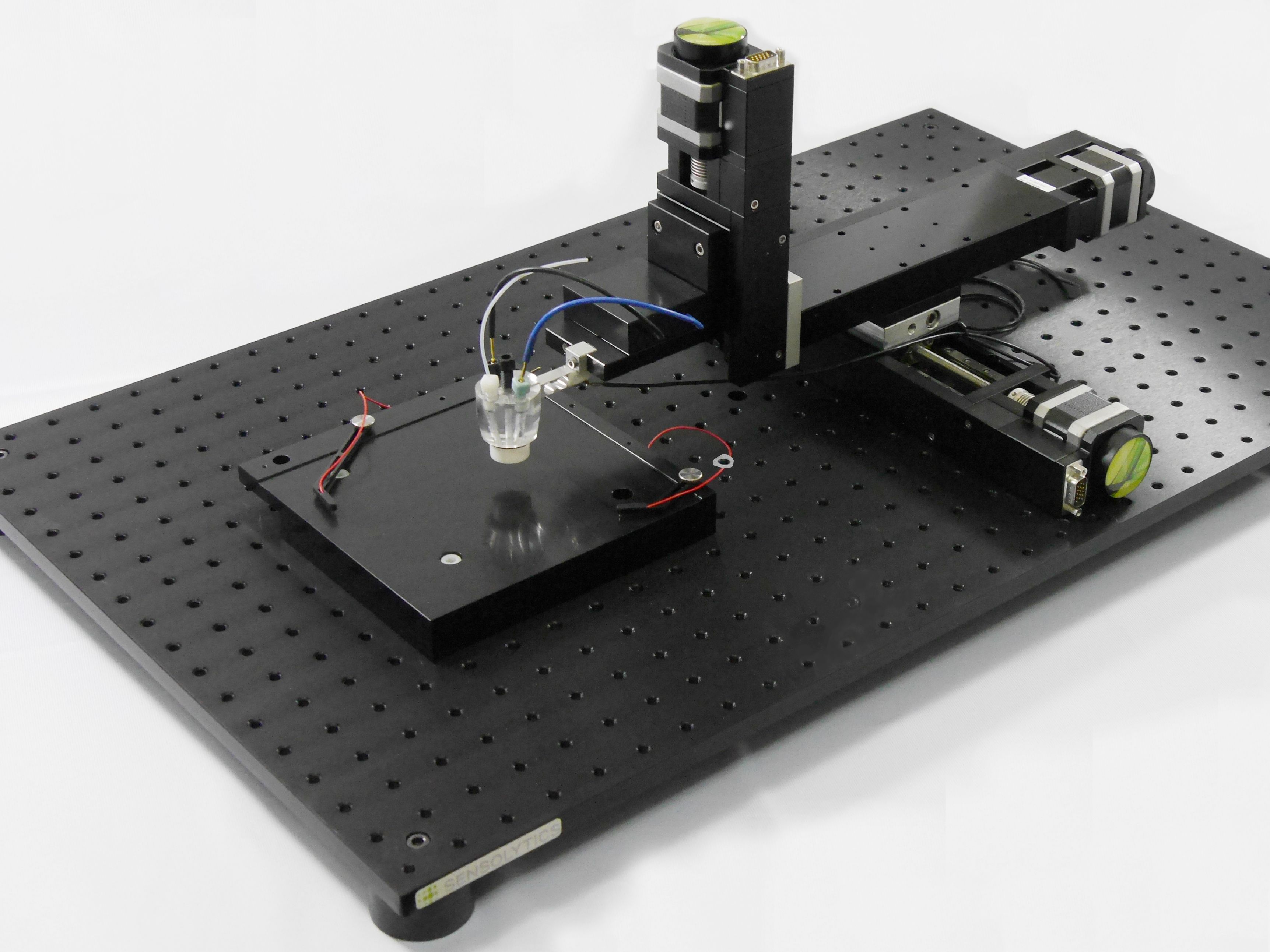
Sensolytics systems are built on a highly integrated, layered architecture, ensuring every component works in perfect synchronization. Sensolytics systems are built on a highly integrated, layered architecture, ensuring every component works in perfect synchronization.

01 Software & Control
 

Software & Control

Intuitive Control. User-Friendly.

Our intuitive and modern SDC software combines probe positioning, potentiostat control, electrolyte pump configuration and data acquisition into a single synchronized environment.

Capabilities
  • Fully automated scanning routines (probe washing, positioning, measurements, retraction).
  • Real-time force feedback and precise contact detection.
  • User-defined procedures for tailored electrochemical experiments.
  • Direct compatibility and integration with Sensolytics SECM systems.

The Sensolytics Advantage Probe positioning, electrolyte handling, and measurement are synchronized by design, effectively eliminating latency between initial droplet contact and electrochemical data acquisition.

02 Probe Positioning & Approach.
 

Probe Positioning & Approach

Force-controlled. Fully Automated.

The XYZ stepper-motor controller, combined with our advanced force control system, enables precise and reproducible probe approaches and confined cell formation across a wide variety of samples.

Capabilities
  • Micrometer-scale precision for highly accurate probe positioning.
  • Automated probe approach via force sensor control.
  • Programmable scan grids and customizable step sequences.

The Sensolytics Advantage Our force-controlled approach ensures consistent electrochemical cell formation and reproducible measurements, minimizing tip damage and uncontrolled surface wetting.

03 SDC Head
 

SDC Head

The Mobile Electrochemical Cell.

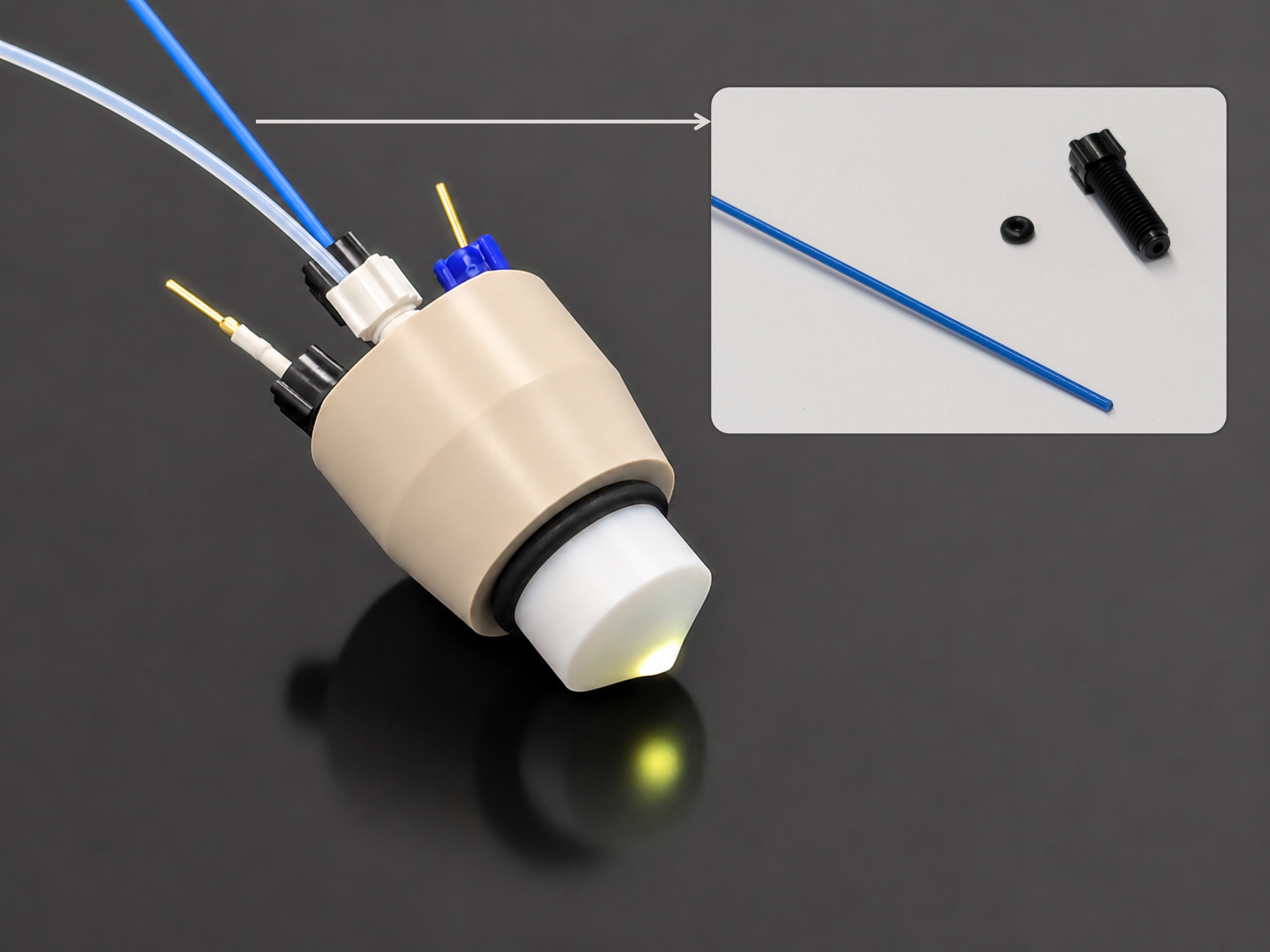
The SDC head serves as a complete mobile electrochemical cell, integrating counter and reference electrode alongside the electrolyte, which is exposed to the sample through a small aperture at the apex of the SDC tip.

Capabilities and advanced options
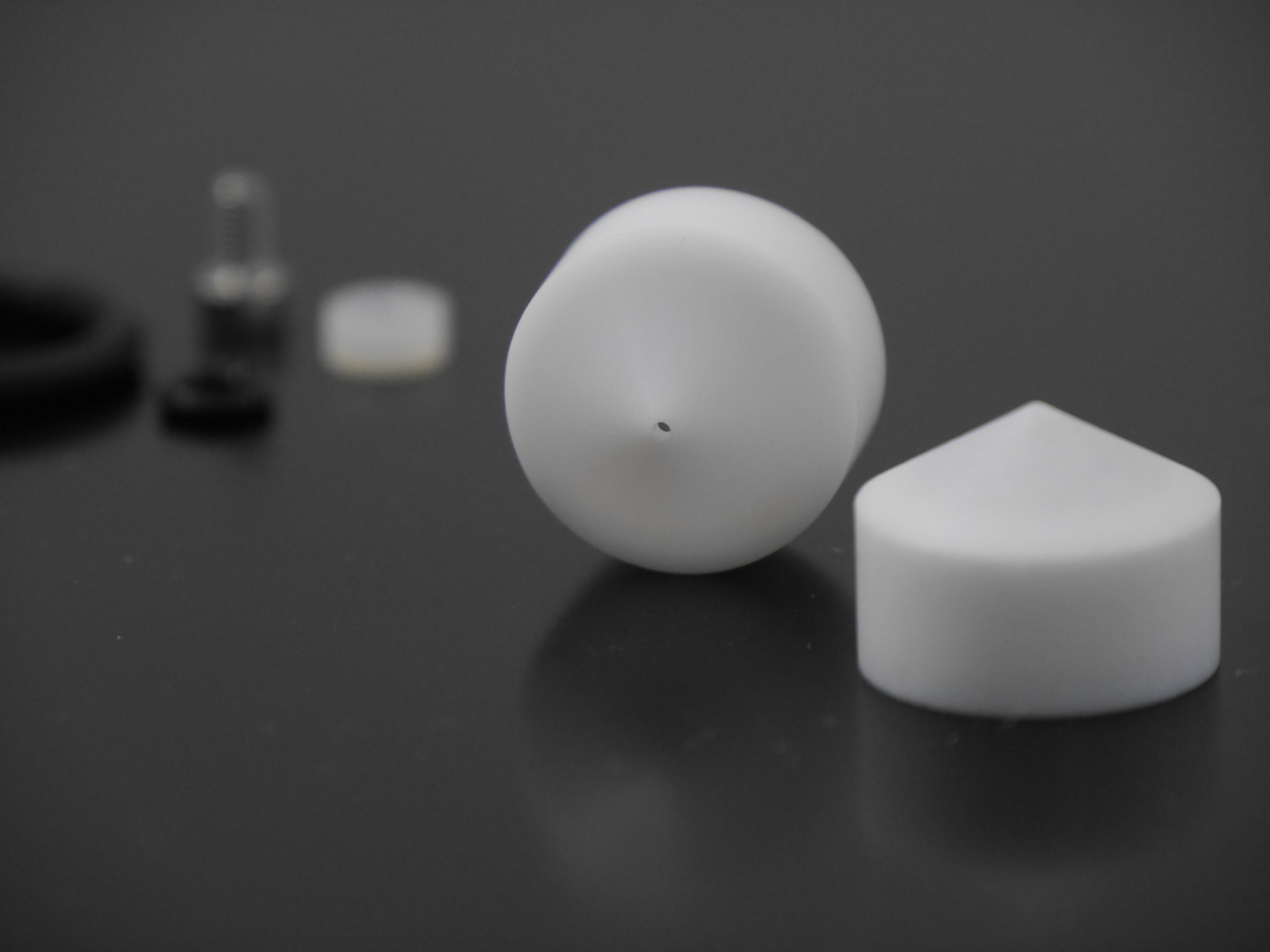
  • Tip opening diameters from 1.0 mm down to 0.2 mm with possible customization.
  • Full compatibility with the Sensolytics SECM probe holders.
  • Optional optical fiber integration for advanced, localized photoelectrochemistry.

The Sensolytics Advantage The SDC head integrates a complete and customizable electrochemical cell into a single probe, offering high spatial resolution and seamless compatibility with the SECM setup.

04 Electrolyte Handling
 

Electrolyte Handling

Controlled Dispensing. Automatic Exchange.

Sensolytics SDC systems enable stable droplet formation, automatic electrolyte exchange, and probe cleaning between measurements within the scan sequence.

Capabilities
  • Minimized cross-contamination between successive measurement points.
  • Integrated cleaning and electrolyte exchange steps.
  • Controlled dispensing down to 1 µL via a micrometering pump for reproducible droplet formation.

The Sensolytics Advantage By automatically resetting the electrolyte conditions before every single measurement, the system guarantees data comparability across extensive scans.

05 Sample Stage
 

Sample Stage

Flexible Mounting. Extended Range.

Our modular sample stage is designed to support a wide variety of samples, and it includes integrated electrical contacts, along with extended travel ranges to enable measurements on large surfaces.

Options include
  • Sample holder with flexible contact arms and waste collection.
  • Extended sample holder (175 x 175 x 25 mm) designed for larger samples.
  • Secure mechanical fixation via base plate screws for stable alignment.

The Sensolytics Advantage Supports a wide range of sample sizes and built-in electrical contact without the need for special accessories, enabling reproducible measurements on both small and large substrates.

Software & Control

Intuitive Control. User-Friendly.

Our intuitive and modern SDC software combines probe positioning, potentiostat control, electrolyte pump configuration and data acquisition into a single synchronized environment.

Capabilities
  • Fully automated scanning routines (probe washing, positioning, measurements, retraction).
  • Real-time force feedback and precise contact detection.
  • User-defined procedures for tailored electrochemical experiments.
  • Direct compatibility and integration with Sensolytics SECM systems.

The Sensolytics Advantage Probe positioning, electrolyte handling, and measurement are synchronized by design, effectively eliminating latency between initial droplet contact and electrochemical data acquisition.

Probe Positioning & Approach

Force-controlled. Fully Automated.

The XYZ stepper-motor controller, combined with our advanced force control system, enables precise and reproducible probe approaches and confined cell formation across a wide variety of samples.

Capabilities
  • Micrometer-scale precision for highly accurate probe positioning.
  • Automated probe approach via force sensor control.
  • Programmable scan grids and customizable step sequences.

The Sensolytics Advantage Our force-controlled approach ensures consistent electrochemical cell formation and reproducible measurements, minimizing tip damage and uncontrolled surface wetting.

SDC Head

The Mobile Electrochemical Cell.

The SDC head serves as a complete mobile electrochemical cell, integrating counter and reference electrode alongside the electrolyte, which is exposed to the sample through a small aperture at the apex of the SDC tip.

Capabilities and advanced options
  • Tip opening diameters from 1.0 mm down to 0.2 mm with possible customization.
  • Full compatibility with the Sensolytics SECM probe holders.
  • Optional optical fiber integration for advanced, localized photoelectrochemistry.

The Sensolytics Advantage The SDC head integrates a complete and customizable electrochemical cell into a single probe, offering high spatial resolution and seamless compatibility with the SECM setup.

Electrolyte Handling

Controlled Dispensing. Automatic Exchange.

Sensolytics SDC systems enable stable droplet formation, automatic electrolyte exchange, and probe cleaning between measurements within the scan sequence.

Capabilities
  • Minimized cross-contamination between successive measurement points.
  • Integrated cleaning and electrolyte exchange steps.
  • Controlled dispensing down to 1 µL via a micrometering pump for reproducible droplet formation.

The Sensolytics Advantage By automatically resetting the electrolyte conditions before every single measurement, the system guarantees data comparability across extensive scans.

Environmental Control

Controlled Atmosphere. Controlled Variables.

Sensolytics SECM systems are designed to easily integrate with modular environmental control systems for defined experimental conditions.

Available configurations
  • Gas line integration for inert atmosphere control.
  • Cell designs enabling electrolyte purging for controlled dissolved gas content.
  • Temperature-control measuring cells
  • Configurations compatible with glovebox operation.

The Sensolytics Advantage Many electrochemical systems are sensitive to oxygen, temperature variations, and gas evolution. Our environmental options provide controlled conditions required for reproducible electrochemical measurements.

Not sure which SDC setup is right for you?

Contact us to discuss your application, experimental conditions, and configuration requirements. We support system selection and customization based on your individual requirements and future upgrades.

From fundamental research to applied R&D

Sensolytics SDC systems enable surface-selective electrochemistry across corrosion studies, coating evaluation, and material performance analysis.

Research to Industry
Flexible for academic and industrial environments
Corrosion Analysis
Localized investigation of material degradation
Custom Integrations
Tailored design for non-standard materials

SDC Systems and Modular Configurations

Discover the Sensolytics SDC Options

SDC Photoelectrochemistry Option

Option Photoelectrochemistry

Expand the analytical capabilities of the SDC platform with localized photoelectrochemical characterization. This option integrates a fiber optic for coupling a light source directly with the SDC head. Designed for research on semiconductor electrodes and photocatalytic surfaces, it enables precise mapping of photocurrent distribution and analysis of light-driven degradation.

Explore
SECM Option Video

Option Video

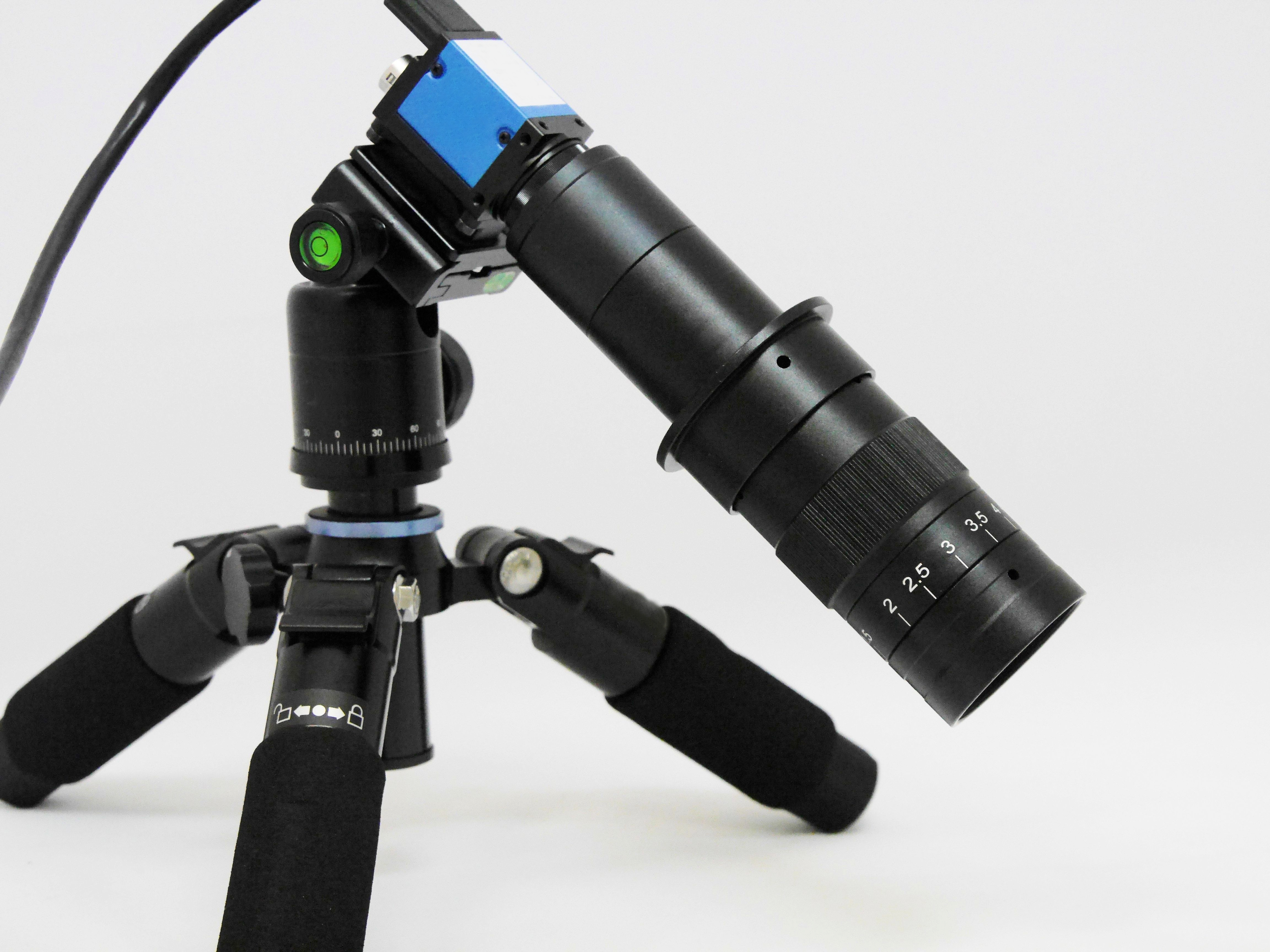
Optimize your experimental setup, sample alignment, and precise probe positioning with this optional video macro system. Mounted on a freestanding stand, the module includes a manual zoom lens with a magnification range of 1:0.7 to 4.5, providing a continuous, live view of the critical interface between the probe tip and the sample.

Explore
SDC Accessories

SDC Accessories

Configure and adapt your SDC system for a wide range of applications using our accessories such as interchangeable SDC tips with different apertures, PEEK SDC bodies for chemically aggressive environments, sample holders, and dedicated organizers for SDC heads and lab components.

Explore

Frequently Asked Questions

Understanding Scanning Droplet Cell (SDC)

Scanning Droplet Cell (SDC) is a localized electroanalytical technique consisting of a miniaturized mobile electrochemical cell, in which the entire three-electrode cell assembly is contained within a small reservoir of electrolyte solution that is formed locally on the sample surface, rather than immersing the entire sample. While the sample acts as the working electrode, the electrolyte, reference, and counter electrodes are integrated into the SDC head.

The Sensolytics SDC creates the electrochemical cell by bringing a PTFE tip into controlled mechanical contact with the sample surface. A force sensor applies a defined contact force (typically between 400 and 500 mN), creating a reproducible seal between the tip and the sample that confines the electrolyte to a well-defined measurement area. This design provides reliable measurements even on surfaces where wettability or porosity would otherwise influence droplet formation.

During a measurement, the confined electrolyte forms a localized three-electrode electrochemical cell whose diameter corresponds to the tip aperture (typically ranging from micrometers to millimeters), allowing for a wide range of electrochemical techniques, such as cyclic voltammetry, electrochemical impedance spectroscopy (EIS), polarization curves, chronoamperometry, and many others, including user-defined routines, at specific, predefined locations on the grid.

After each measurement, the electrolyte is pumped back into the SDC body, the SDC head is lifted off the surface, and moved to the next predefined position. Before the next measurement, the probe is automatically rinsed with fresh electrolyte, ensuring that every measurement is performed under identical conditions and preventing cross-contamination between different measurement points.

By repeating this sequence across a user-defined grid, the SDC allows users to generate electrochemical maps with spatial resolution or perform point-specific stationary measurements, enabling a direct comparison of localized electrochemical behavior in heterogeneous materials without affecting the rest of the sample.

Conventional electrochemical testing typically consists of immersing all or a large part of the sample in an electrolyte, providing a single measurement that represents the average electrochemical behavior of the exposed area. While this approach is well suited for evaluating overall material performance, it cannot resolve local variations across heterogeneous surfaces.

In contrast, a Scanning Droplet Cell (SDC) confines the electrochemical measurement to a small, well-defined area of the sample, typically ranging from micrometer- to millimeter-scale, depending on the SDC tip aperture. The SDC head is automatically moved across user-defined measurement positions, enabling reproducible localized electrochemical measurements over large, flat sample surfaces. This allows high-throughput materials screening and spatially resolved mapping of electrochemical properties for direct comparison of microstructural features, coatings, welds, phase boundaries, or surface treatments without immersing the entire sample.

Since only a small area is exposed during each measurement, the SDC technique minimizes electrolyte consumption and preserves the integrity of the rest of the sample surface. This makes it ideal for the systematic screening of materials and characterization using multiple techniques on a single sample.

While all three techniques are considered electrochemical localized methods, they are designed for different measurement principles, spatial resolutions, and applications:

  • SECM usually involves an ultramicroelectrode (UME) immersed in an electrolyte solution to probe the local electrochemical activity near a sample surface without the probe making contact with that surface. The measured current reflects the local electrochemical behavior of the sample below the probe, enabling high-resolution imaging of electrochemical activity with spatial resolutions ranging from the micrometer to nanometer scale.
  • SECCM employs a glass (sub)micro- or nanopipette filled with electrolyte to form a microscopic liquid meniscus between the pipette and the sample surface. This creates a confined electrochemical cell, making SECCM particularly suitable for nanoscale electrochemical measurements, single-particle studies, and investigations of individual grains or crystal facets.
  • SDC uses a mechanically sealed PTFE tip that contains the electrolyte, reference electrode, and counter electrode within the probe head. During each measurement, the tip is brought into controlled contact with the sample, forming a localized electrochemical cell over an area typically ranging from hundreds of micrometers to several millimeters, depending on the tip aperture. After the measurement, the electrolyte is withdrawn, the probe is lifted, and the system automatically moves to the next predefined location using fresh electrolyte. This makes SDC particularly well suited for automated, high-throughput electrochemical screening and mapping of large, flat samples, coatings, welds, material libraries, and heterogeneous surfaces without immersing the entire specimen.

The SDC system is highly versatile and enables the analysis of samples that are difficult or impractical to study using conventional electrochemical cells. Examples of such samples include large metal plates, complex welded joints, and coated substrates. Since the electrochemical cell is formed locally by bringing the PTFE tip into controlled contact with the sample surface. Combined with the high-resolution XYZ positioning system and force-controlled approach, irregular surfaces can be investigated while maintaining reproducible electrochemical cell formation.

SDC requires minimal sample preparation. This is because the sample area under analysis is determined solely by the footprint of the electrolyte droplet; therefore, there is no need to section a large sample to meet a standard cell size, embed a sample in a resin, or use masking tapes or lacquers to isolate the area of interest. Samples may be analyzed in their native or as-received condition, which maintains sample integrity and speeds the experimental process.

No. The SDC system is specifically designed to perform localized electrochemical measurements without immersing the entire sample in an electrolyte. Instead, the electrochemical cell is formed locally by bringing the PTFE tip of the SDC head into controlled contact with the sample surface. The SDC head contains the electrolyte, reference electrode, and counter electrode, while the measurement area is defined by the tip aperture, typically ranging from the micrometer to millimeter scale. Since only a small region of the sample is exposed during each measurement, the rest of the surface remains unaffected, making the technique well suited for targeted electrochemical characterization of large, valuable, or complex components.