




Modular System Architecture
Build a SECM Platform Tailored to Your Research
Sensolytics systems are based on a modular architecture that allows for easy adaptation and ensures that all components operate in perfect synchronization. Sensolytics systems are based on a modular architecture that allows for easy adaptation and ensures that all components operate in perfect synchronization.
01 Software & Control
→Software & Control
Intuitive Control. Experimental Freedom.
Our SECM control software combines probe positioning, electrochemical control, and advanced data visualization in a single interface.
Capabilities
- Real-time current acquisition.
- Automated approach curves and tilt compensation (included in the Option High-Res).
- Versatile electrochemical characterization at any specified grid point.
- 3D array visualization and export-ready data plots.
The Sensolytics Advantage Powerful control software with a modern and intuitive user interface, comfort functions, and a selectable working environment for convenient operation.
02 Precision Positioning Stages.
→Precision Positioning Stages
Precision Electrochemical Control. Fully Integrated.
In Sensolytics systems, the XYZ stepper motor controller provides the mechanical stability required to perform both routine and advanced SECM measurements.
Configurations & Upgrades
- Standard stage: 25 × 25 × 25 mm travel range with 4 nm calculated resolution.
- Extended stage: Expandable travel ranges up to 145 × 145 × 50 mm or customized solutions.
- High Precision: Optional closed-loop piezo positioning upgrades to achieve a resolution down to 1.5 nm.
- Option Shearforce: Decouple topographic artifacts from true electrochemical signals.
The Sensolytics Advantage Confidently map large sample areas while retaining the micro- and nanometer-level precision required for localized electrochemical characterization.
03 SECM Probes
→SECM Probes
Precision at the micro- and nanoscale.
Sensolytics offers a variety of micro- and ultramicroelectrodes with controlled geometry and defined RG values for reproducible SECM measurements.
Advanced Options (Photoelectrochemistry)
- Gold ring microelectrode with integrated optical fiber.
- Broad UV–Vis compatibility (190–1250 nm).
- Simultaneous localized illumination and electrochemical investigation.
The Sensolytics Advantage The quality of the probe is critical to obtain a stable signal in SECM. Our probe fabrication process ensures controlled probe geometries and consistent RG values, which provides reproducible feedback behavior and optimal spatial resolution.
04 Electrochemical Cells
→Electrochemical Cells
Designed for every type of experiment.
Sensolytics provides a wide selection of cell configurations designed to adapt to different experimental conditions and materials.
- Small and large volume electrochemical cells.
- Standard PMMA cells and inert, PEEK-based cells for chemically aggressive environments.
- Flexible cabling for sample polarization (top or bottom contact).
- Baseplates designed for thermal control.
The Sensolytics Advantage Our versatile and customizable measuring cells allow you to create the specific settings required for your experimental conditions.
05 Environmental Control
→Environmental Control
Controlled Atmosphere. Controlled Variables.
Sensolytics SECM systems are designed to easily integrate with modular environmental control systems for defined experimental conditions.
Options include
- Cell designs enabling electrolyte or gas purging for controlled dissolved gas content.
- Temperature-control measuring cells.
- Configurations compatible with glovebox operation.
The Sensolytics Advantage Many electrochemical systems are sensitive to oxygen, temperature variations, and gas evolution. Our environmental control options provide modulated conditions required for reproducible electrochemical measurements.
Software & Control
Intuitive Control. Experimental Freedom.
Our SECM control software combines probe positioning, electrochemical control, and advanced data visualization in a single interface.
Capabilities
- Real-time current acquisition.
- Automated approach curves and tilt compensation (included in the Option High-Res).
- Versatile electrochemical characterization at any specified grid point.
- 3D array visualization and export-ready data plots.
The Sensolytics Advantage Powerful control software with a modern and intuitive user interface, comfort functions, and a selectable working environment for convenient operation.
Precision Positioning Stages
Micro to Nanoscale Control, Fully Integrated.
In Sensolytics systems, the XYZ stepper motor controller provides the mechanical stability required to perform both routine and advanced SECM measurements.
Configurations & Upgrades
- Standard stage: 25 × 25 × 25 mm travel range with 4 nm calculated resolution.
- Extended stage: Expandable travel ranges up to 145 × 145 × 50 mm or customized solutions.
- High Precision: Optional closed-loop piezo positioning upgrades to achieve a resolution down to 1.5 nm.
- Option Shearforce: Decouple topographic artifacts from true electrochemical signals.
The Sensolytics Advantage Confidently map large sample areas while retaining the micro- and nanometer-level precision required for localized electrochemical characterization.
SECM Probes
Precision at the micro- and nanoscale.
Sensolytics offers a variety of micro- and ultramicroelectrodes with controlled geometry and defined RG values for reproducible SECM measurements.
Configurations
- Gold ring microelectrode with integrated optical fiber.
- Broad UV-Vis compatibility (190-1250 nm).
- Simultaneous localized illumination and electrochemical investigation.
The Sensolytics Advantage The quality of the probe is critical to obtain a stable signal in SECM. Our probe fabrication process ensures controlled probe geometries and consistent RG values, which provides reproducible feedback behavior and optimal spatial resolution.
Electrochemical Cells
Designed for every type of experiment.
Sensolytics provides a wide selection of cell configurations designed to adapt to different experimental conditions and materials.
Configurations
- Small and large volume electrochemical cell.
- Standard PMMA cells and inert, PEEK-based cells for chemically aggressive environments.
- Flexible cabling for sample polarization (top or bottom contact).
- Baseplates designed for thermal control.
The Sensolytics Advantage Our versatile and customizable measuring cells allow you to create the specific settings required for your experimental conditions.
Environmental Control
Controlled Atmosphere. Controlled Variables.
Sensolytics SECM systems are designed to easily integrate with modular environmental control systems for defined experimental conditions.
Available configurations
- Cell designs enabling electrolyte or gas purging for controlled dissolved gas content.
- Temperature-control measuring cells
- Configurations compatible with glovebox operation.
The Sensolytics Advantage Many electrochemical systems are sensitive to oxygen, temperature variations, and gas evolution. Our environmental control options provide modulated conditions required for reproducible electrochemical measurements.
Not sure which SECM configuration fits your experiment?
Contact us to discuss your application, experimental conditions, and configuration requirements. We support system selection and customization based on your individual requirements and future upgrades.
SECM Systems and Modular Configurations
From standard configurations to specialized modules, Sensolytics SECM systems can be adapted to a wide range of research applications.
 Start Here
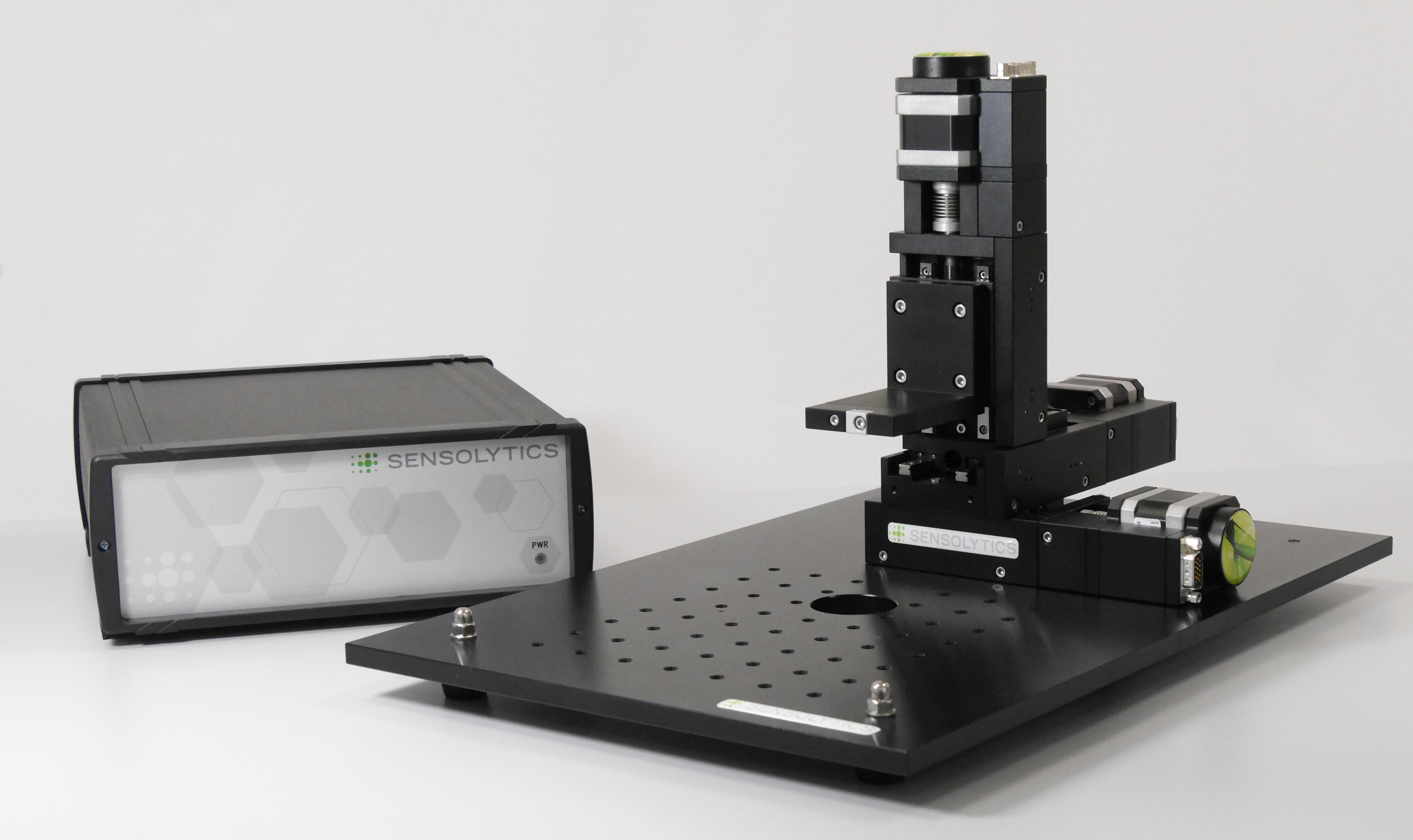
Sensolytics Base SECM
The Sensolytics Base SECM is a modular platform for local electrochemical characterization It includes a stepper motor-driven XYZ stage and is supplied with a starter kit, which includes a 10 and 25 µm-diameter Pt microelectrode, a Pt counter, and an Ag/AgCl reference electrode. The system supports probe diameters of 10-100 µm.
- Integrated positioning system with controller
- Intuitive software for experiment control and data acquisition
- Modular architecture for flexible system upgrades
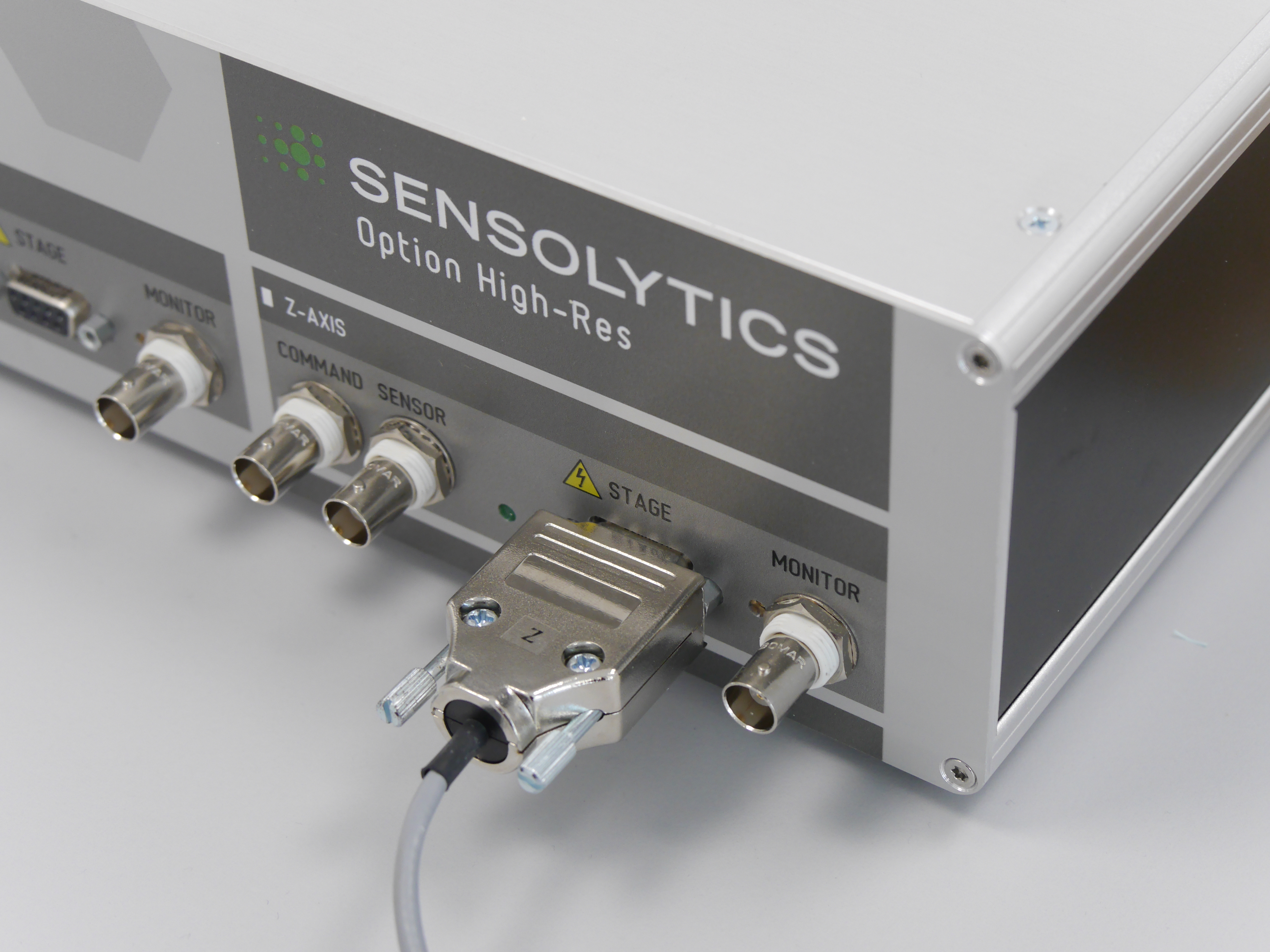
Option High-Res
Upgrade to a closed-loop piezoelectric positioning system for nanometer-scale imaging. The module provides 1.5 nm nominal resolution and 0.2 nm repeatability, using Silicon HR sensor for position feedback and enables software-based tilt correction.
Explore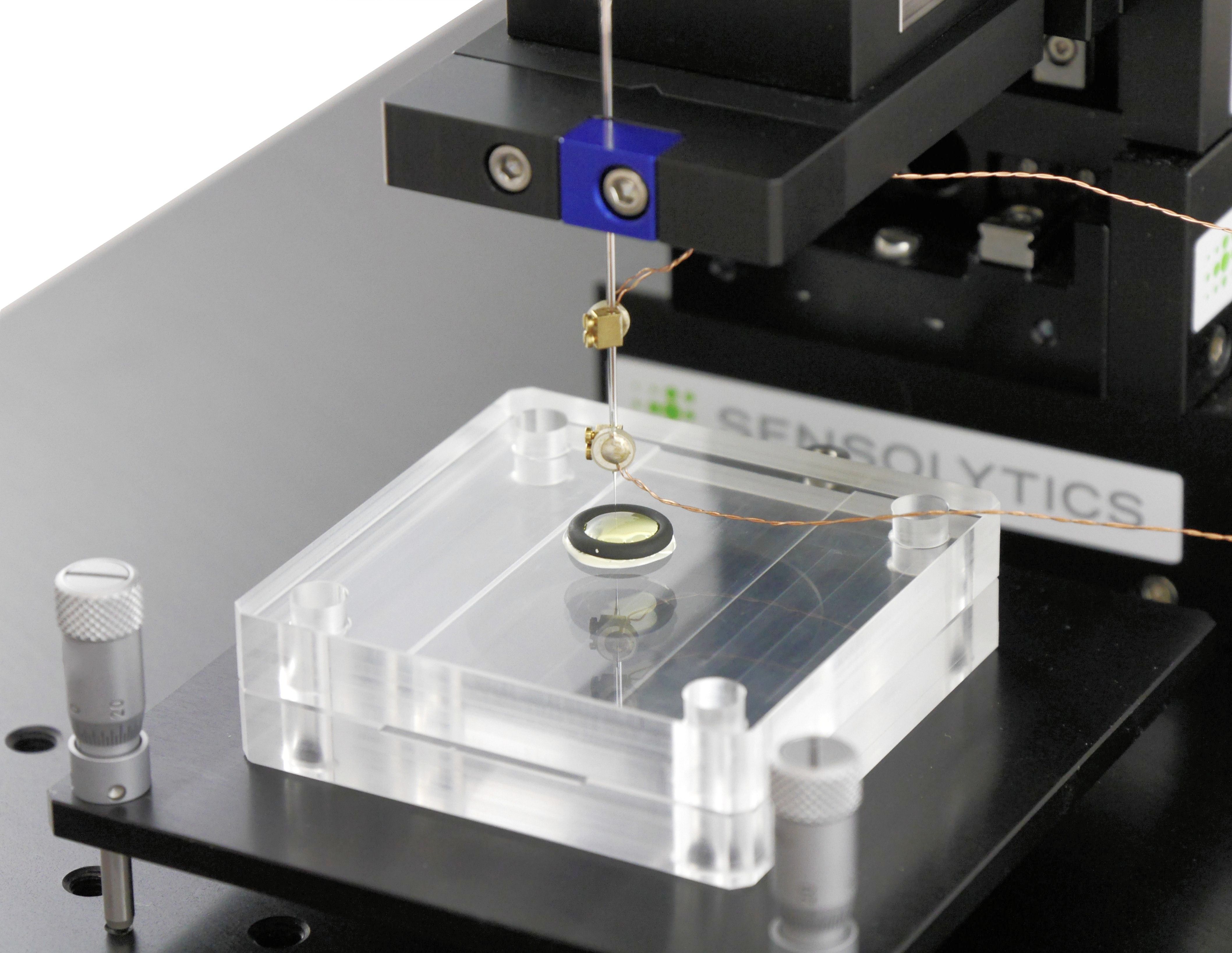
Option Shearforce
Option for integrating shearforce-based constant-distance mode imaging for a deconvolution of topographic and electrochemical activity signals, supporting measurements on rough surfaces and substrates with structural features below 1 µm.
Explore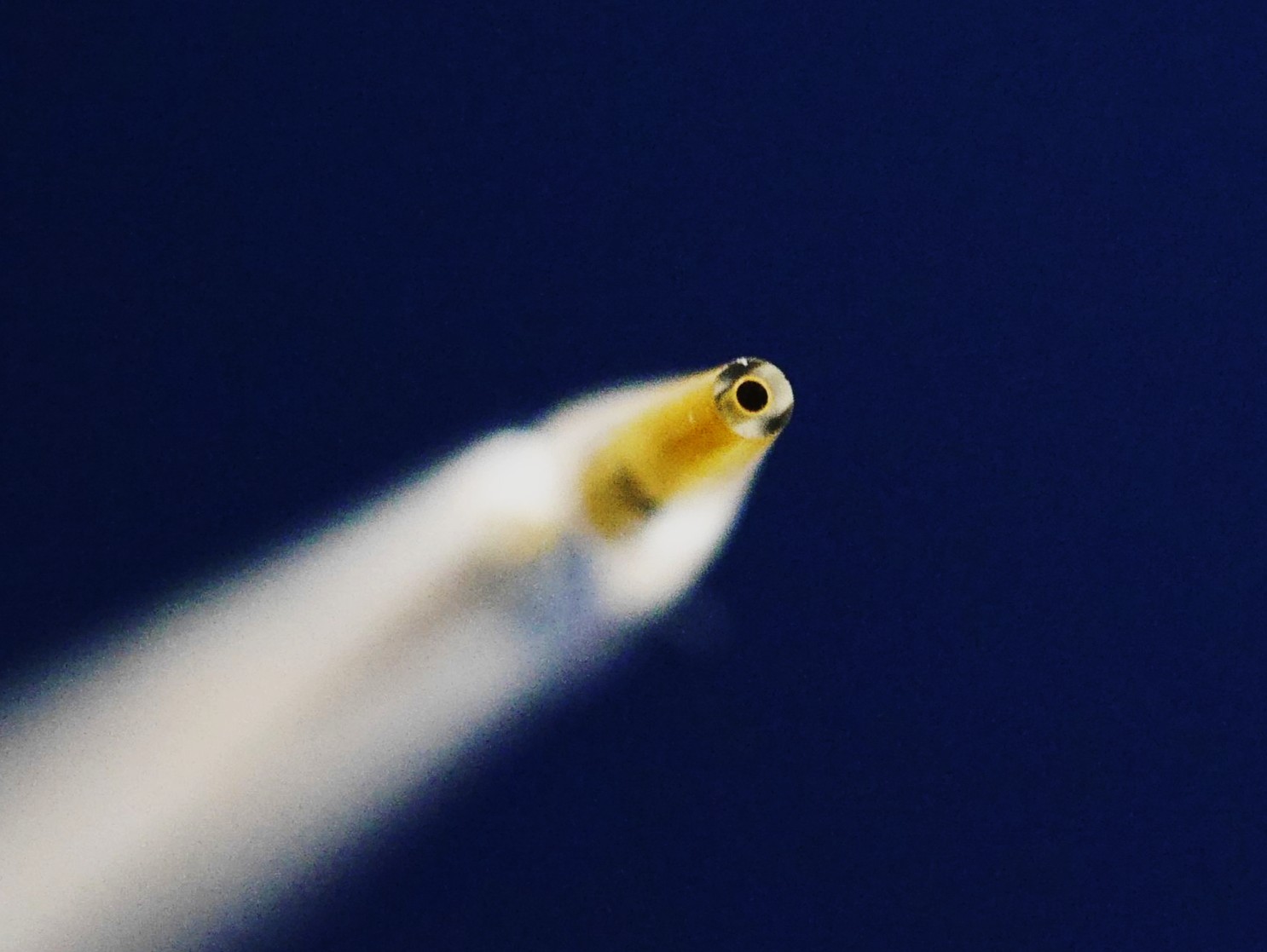
Option SPECM
By integrating an optical fiber with a concentric gold microelectrode, the scanning photoelectrochemical microscopy (SPECM) module enables spatially resolved measurements in light-responsive materials by combining local illumination with electrochemical analysis.
Explore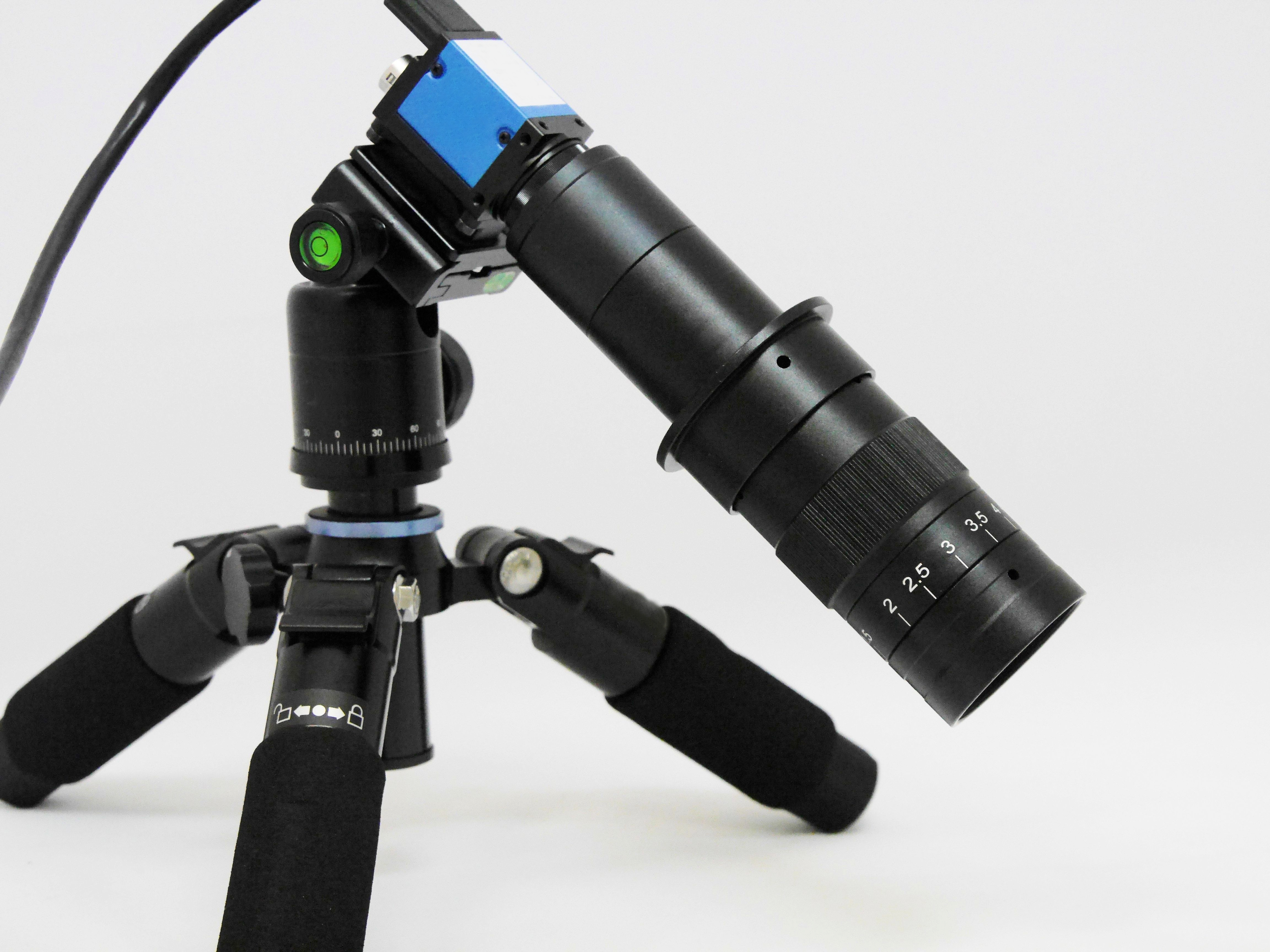
Option Video
The video macro system enables visual control of the sample alignment and probe positioning. It includes a manual zoom objective (1:0.7-4.5x) mounted on an independent stand for live view of the tip-sample interface.
Explore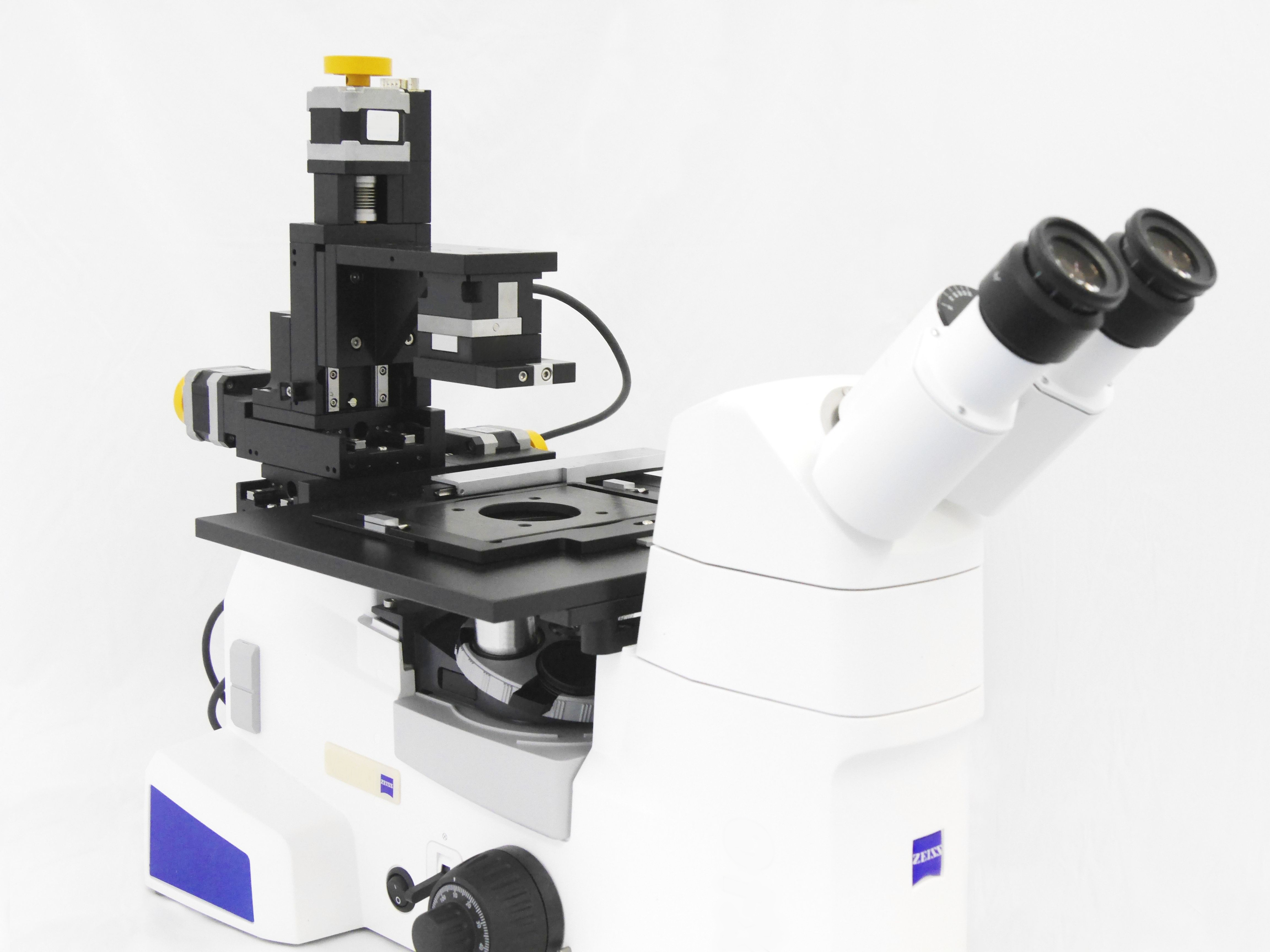
Inverted Microscope Upgrade
Mount the SECM system directly onto standard inverted optical microscopes. This configuration is ideal for applications that require simultaneous electrochemical mapping and optical observation of biological or transparent samples.
ExploreFrequently Asked Questions
Understanding Scanning Electrochemical Microscopy
SECM is a powerful scanning probe technique that maps localized electrochemical activity. It works by positioning an ultramicroelectrode (UME) probe ↗ near a substrate surface in an electrolyte solution. The probe is polarized to drive a redox reaction of an electrochemical active species present in the solution. As the probe scans across the surface in the X-Y plane, the measured current reflects local variations in reactivity, conductivity, or topography.
One of the most common modes in SECM is the feedback mode. In this mode, the electrolyte contains a free-diffusing reversible redox mediator that undergoes electrochemical conversion at the SECM probe in a diffusion-controlled manner. As the probe approaches a conductive substrate, the mediator, oxidized or reduced at the polarized probe, is regenerated at the substrate and diffuses back to the probe, increasing the probe current (positive feedback). In contrast, when approaching an insulating substrate, the surface blocks the mediator diffusion to the probe, reducing the current (negative feedback).
Beyond amperometric feedback imaging, SECM systems support, among others, generation-collection mode, potentiometric imaging, and redox competition mode.
Spatial resolution in SECM is mainly governed by the size of the ultramicroelectrode probe and the probe-substrate distance. The active electrode diameter defines the lateral extent of the electrochemical measurement area, while the tip-substrate separation controls how much the diffusion layer spreads laterally before reaching the surface.
For high-resolution imaging, both a small probe diameter and close approach are required. Typical probe diameters range from tens of micrometers to a few hundred nanometers, enabling resolutions from micron down to nanometer scale. The RG value (the ratio of the overall glass insulator radius to the active electrode radius) also influences spatial resolution and probe behavior. Sensolytics probes provide the optimal balance for general SECM applications, ensuring a well-defined, predictable diffusion profile for the redox mediator while still allowing the probe to approach the surface closely without physical interference.
Sensolytics SECM systems are driven by integrated software ↗ that supports a comprehensive library of scan modes and measurement configurations without requiring time-consuming hardware reconfiguration:
Electrochemical & Measurement Modes:
- Amperometric Feedback Modes
- Generation-Collection Mode
- Redox Competition Mode
- Potentiometric & OCP Mapping
- AC-SECM
Positioning & Multi-Dimensional Mapping:
- Option Shearforce ↗: Non-contact distance control that decouples topographic and electrochemical activity signals, enabling measurements on rough, micro-structured, or mechanically sensitive surfaces.
- 2D / 3D Mapping: High-resolution X-Y scans and three-dimensional surface mapping.
- 4D Mapping: Spatially resolved kinetic analysis by recording a Z-approach curve (current vs. distance) at each X-Y position, generating a four-dimensional dataset.
Sensolytics SECM systems are modular platforms, designed for the investigation of localized electrochemical processes across a wide range of research and industrial applications. Key application areas include:
Corrosion and Surface Protection:
- Mapping localized pitting corrosion precursors and propagation.
- Evaluating the integrity, permeability, and defect distribution of anti-corrosive coatings.
- Monitoring galvanic corrosion and galvanic coupling processes in real-time.
Energy Storage and Electrocatalysis:
- High-throughput screening of novel electrocatalyst arrays (e.g., for ORR, OER, HER).
- Characterizing solid-electrolyte interphase (SEI) layers in battery research.
- Mapping spatially resolved ion conductivity and reactivity in fuel cell membranes.
Biological and Biophysical Chemistry:
- Non-invasive monitoring of single-cell metabolism and localized respiration.
- Spatially mapping enzymatic activity on bio-functionalized interfaces.
- Studying localized membrane transport and ion channel activity using potentiometric probes.
Materials Science and Semiconductor Research:
- Investigating heterogeneous charge transfer kinetics on multi-phase or micro-structured materials.
- Correlating surface topography with localized conductivity and electrochemical reactivity.
- Mapping photo-induced reactivity on light-harvesting semiconductor surfaces (using the Option SPECM ↗).
